Elders are people who inspire us, people we turn to when we need help or advice. Here are six elders who wanted to make the world a better place for both human beings and other living things:
- Henry Thoreau—a naturalist who also was a conductor on the Underground Railroad
- Ishi—a Native American who taught people of European descent about his traditional way of life
- Cesar Chavez—a farm worker who made life better for people and other living things
- Wangari Maathai—a college professor who planted trees to make the world better
- Rachel Carson—a scientist who showed how toxic chemicals were harming the Earth
- Harriet Tubman
These six people cared about human beings, and they also cared about nature and the outdoors. Another way to say this is: These are six human beings who had a positive impact on other human beings, and a positive impact on the natural world.
Henry Thoreau

For two years, Henry Thoreau lived in a cabin that he built himself. While he lived there, he grew much of his own food. He wanted to show that you could live simply.
While living at Walden, he went to jail because he refused to pay taxes to support the Mexican American War. He thought this war was unjust.
Thoreau’s family were conductors on the Underground Railroad. His cabin at Walden Pond was a “station” on the Underground Railroad, where people escaping from slavery could safely stay on their trip to freedom.
For many years, Thoreau kept a field notebook, which he called his journal. In his journal, he made careful records of the natural world.
After Thoreau left his cabin, he went back to live in his parents’ house. He helped his father run the family business of making pencils. He had his own business, working as a surveyor. He liked working as a surveyor because he could spend time outdoors. And he helped his mother with her work on the Underground Railroad.
[Photo: public domain image]
Ishi

Ishi (EE-shee) belonged to the Yahi (YAH-hee) people. The Yahi lived in the foothills around Mount Lassen, in northern California.
When people from the United States and Mexico discovered gold near Mount Lassen, they began moving into the Yahi nation. They brought diseases that made many Yahi grow ill and die, and they took over land that the Yahi used to gather food.
One by one, the Yahi died of disease and starvation, until only Ishi was left alive. For a long time, Ishi lived alone, and stayed away from the people of the United States. But at last, he bravely decided that he would join these new people who had taken over his country.
Ishi was offered a job working at the Museum of Anthropology in San Francisco, and he moved there from his home near Mount Lassen. For the rest of his life, Ishi taught other people how his people lived in harmony with the natural world.
He made friends in San Francisco, and taught his new friends many of his outdoors skills—how to make a bow and arrows, how to start a fire using things you find in the woods, how to make a harpoon to catch salmon, and more.
[Photo: public domain image]
Wangari Maathai
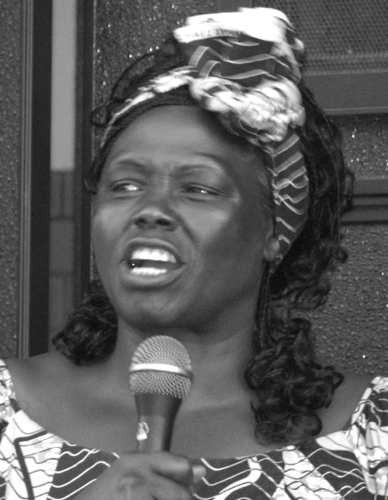
Wangari Maathai was a college professor in the African country of Kenya. She lived in the city, but she often went out into the country, too.
While she was in the country, she noticed that many women who lived on farms had a hard time finding enough wood for their cooking fires—most of the farm people in Kenya did all their cooking over open fires. She also saw that in many parts of Kenya, soil was washing away because there weren’t enough trees.
Women all across Kenya were having a hard time because there weren’t enough trees.
This gave Wangari Maathai an idea. Why not get together a group of people who would plant more trees? She called this new group the “Green Belt Movment.” Many women liked her idea, and soon there were women all over Kenya who were growing new trees to be planted.
And her idea worked! Planting trees helped to protect the environment, and it also made life better for human beings.
For her work with the Green Belt Movement, Wangari Maathai won the Nobel Peace Prize, one of the most important prizes in the world.
[Photo credit: Center for Neighborhood Technology (CC BY-SA 2.0)]
Cesar Chavez
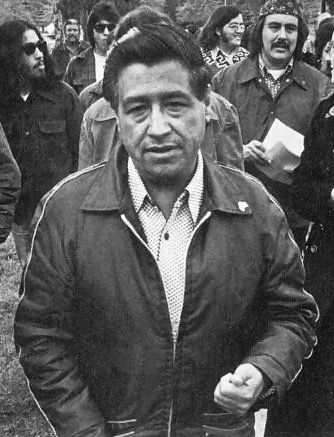
Cesar Chavez lived in San Jose and had a job as a farm worker. But he began to see that farm workers were not treated well. So he began working to help other farm workers to get better pay, and to be treated better.
One of the things Chavez noticed was that the pesticides used by farmers to kill harmful insects were also bad for human beings. Some farm workers who picked grapes said they were getting ill from the pesticides used on the grapes.
Chavez knew that if farm workers were getting ill from the pesticides, the people who bought and ate the grapes could also get ill.
He organized a boycott of grapes. He told everyone across the United States that they should not buy grapes because the pesticides were making the farm workers ill, and might make other people ill, too.
Cesar Chavez helped many people see that what is bad for Nature is often bad for human beings, too.
[Photo credit: Movimiento (CC BY-SA 3.0)]
Rachel Carson
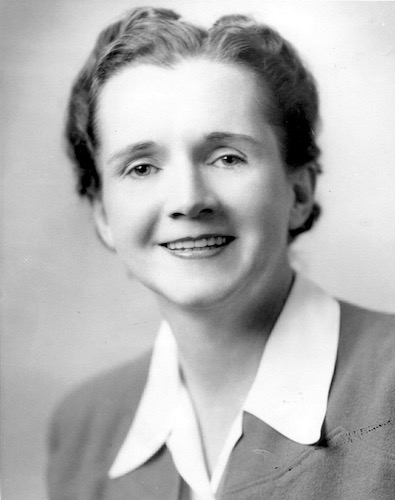
Rachel Carson was a marine biologist and a naturalist. In 1945, she began to notice that certain chemicals were harming wildlife. There was one chemical, a pesticide called DDT that was particularly bad for wild animals. She wanted to find out how DDT was harming the environment. So she left her job with the U. S. Fish and Wildlife Service, and began to work full time as a writer and researcher.
She found out that DDT was especially harmful to certain birds, such as Ospreys and Peregrine Falcons. These birds ate prey that had DDT in them. The DDT stayed in the birds, and made the shells of their eggs too thin. Instead of hatching, the eggs cracked open. So Ospreys and Peregrine Falcons were slowly dying off.
In 1962, Rachel Carson wrote a best selling book, Silent Spring, that told how DDT was killing wildlife. The companies that made DDT tried to stop her by saying she was not a real scientist, and that she was a bad person. But most people knew she was right. By 1972, the United States made it illegal to use DDT.
Rachel Carson helped make the world better for both human beings and wildlife.
[Photo credit: US F&W, public domain image]
Harriet Tubman
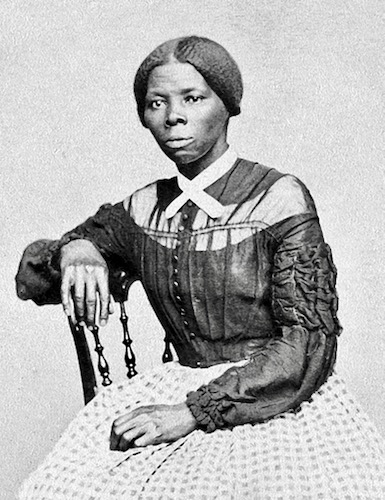
Harriet Tubman was born into slavery in Maryland, probably in 1822. In 1849, when she was about 27 years old, she freed herself and escaped to Pennsylvania. After she was free, she returned more than a dozen times to slave states to help more than 70 en-slaved African Americans free themselves. Then during the Civil War, she served the U.S. Army as a scout.
To help other African Americans escape from slavery, Harriet Tubman had excellent outdoors skills. She was a skilled hiker, able to walk hundreds of miles with almost no equipment. She could find her way on long journeys using the sun and stars. She knew how to travel without leaving anything that would allow slave catchers to follow her.
She was also a superb naturalist. She could live off the land, and knew which plants were edible. She knew how to hunt animals for food, how to skin them and cook them. She also knew about herbal remedies, and could find plants to clean wounds or relieve pain. All these skills were important in helping African Americans escape to freedom.
Harriet Tubman used her outdoors skills, and her knowledge of the natural world, to make the world a better place.
[Photo: public domain image]
Other Ecojustice Elders To Find Out About
Anne Anderson — an ordinary person who fought against toxic pollution in her community
David Suzuki — journalist and environmental activist
Vadana Shiva — ecofeminist and activist
Winona LaDuke — economist and environmentalist
Catherine Coleman Flowers — environmental health researcher who has worked on wastewater issues
Pete Seeger — Hudson River activist and folk musician
Van Jones — a lawyer who advocates for “green jobs”
Nalleli Cobo — teenager who fought Big Oil and won
 Ecojustice Camp